

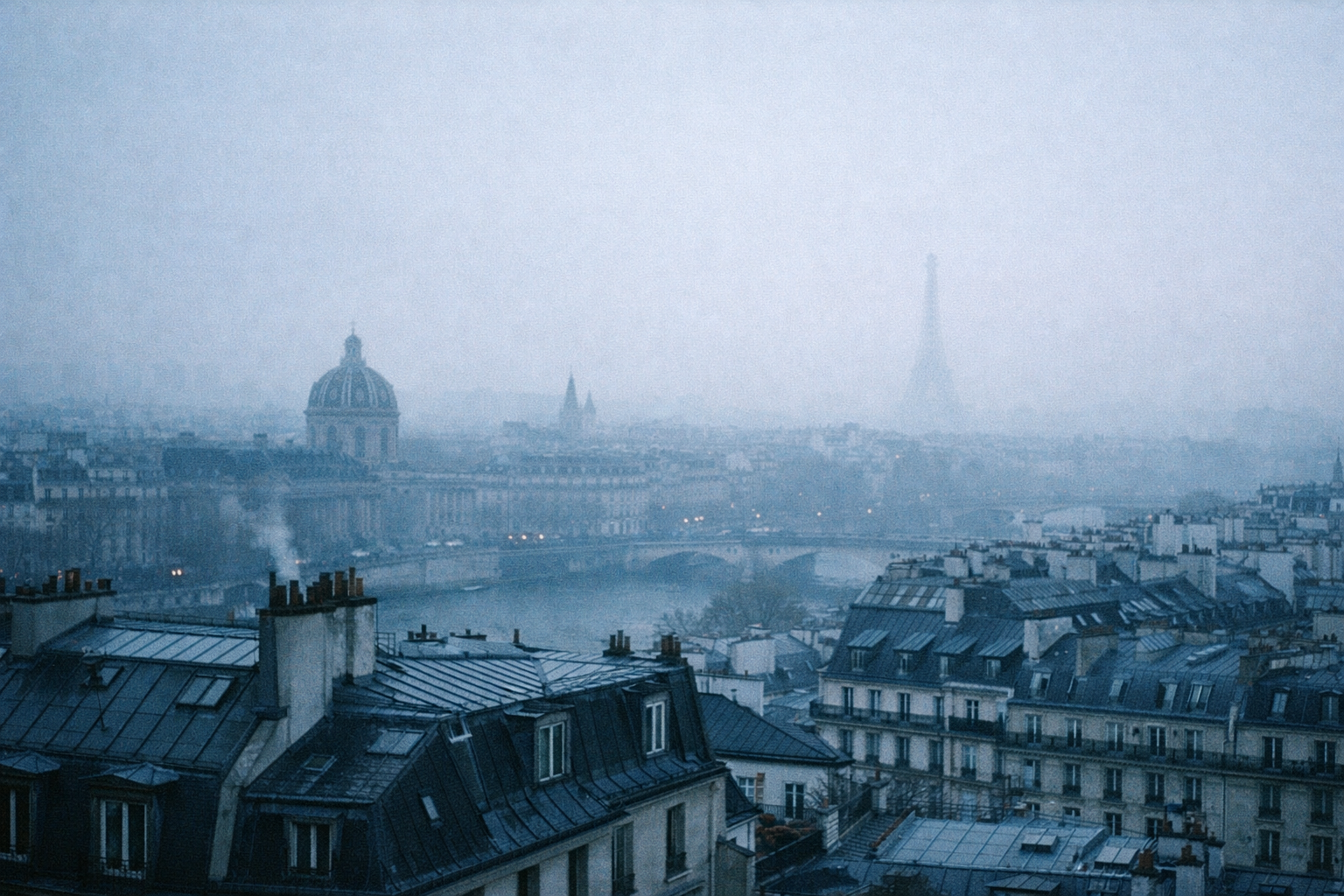
At a Distance
Paris was not a city I learned to love easily.
A visual memoir of distance, hesitation, ritual, resistance, and eventual acceptance.
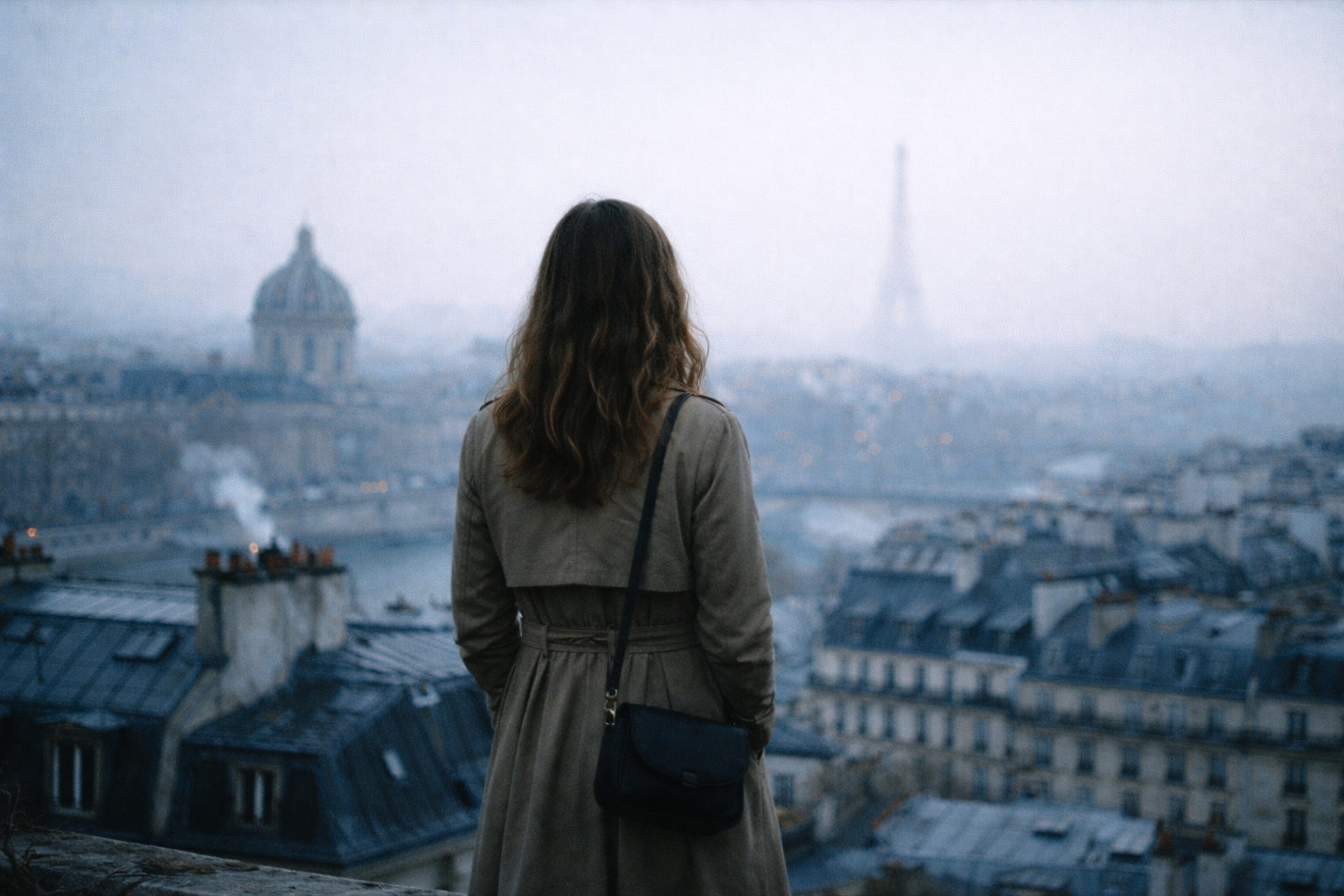
At a Distance
Paris was not a city I learned to love easily.
For nearly a decade, living in the south of France, I avoided her intentionally. I traveled elsewhere, across borders and across languages, choosing places that felt more legible, more aligned with my Anglo-Saxon sensibilities.
Even my airport choices were strategic. I bypassed Charles de Gaulle whenever I could, preferring less complication. Paris remained at a distance: dense, coded, faintly forbidding. A city that did not offer itself as hospitable to me.
Then, unexpectedly, circumstances changed.
Restricted Movement
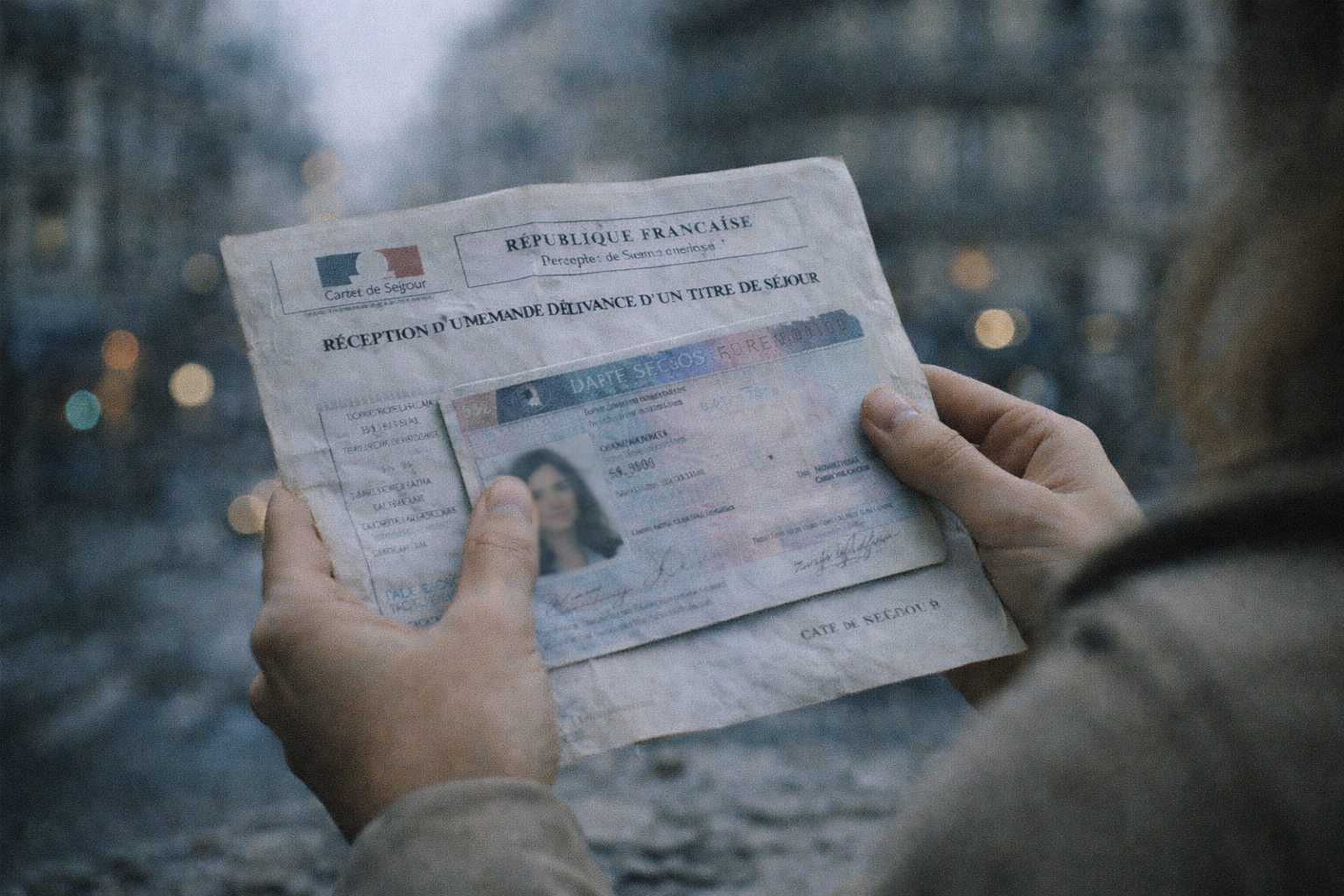
A delay in renewing my residence permit, minor in bureaucratic terms, but expansive in effect, altered the boundaries of my movement.
I carried an expired residence card and a provisional document, entirely in French, unlikely to be properly deciphered by anyone outside France. This created a limit on travel for me. Technically, I could still travel within the Schengen zone. In practice, it felt like a negotiation I was not prepared to undertake.
What unsettled me was not the inconvenience, but the erosion of freedom. Movement, once effortless, now required explanation. Justification. Permission.
I was no longer willing to cross borders, even within the established region. The language of the document had become the barrier. I was only being permitted to move.
So I stayed in France. That was not a hardship. I love France.
And with a reluctance I did not fully examine, I began to consider Paris as a destination.
Learning Resistance
The first times I tried to know her, years earlier, it had not gone well.
I had arrived on her doorstep eager, curious, thinking I was prepared, though nervous. I moved through the city as one does when it remains illegible, too quickly, too directly, assuming the rules were the same or at least similar.
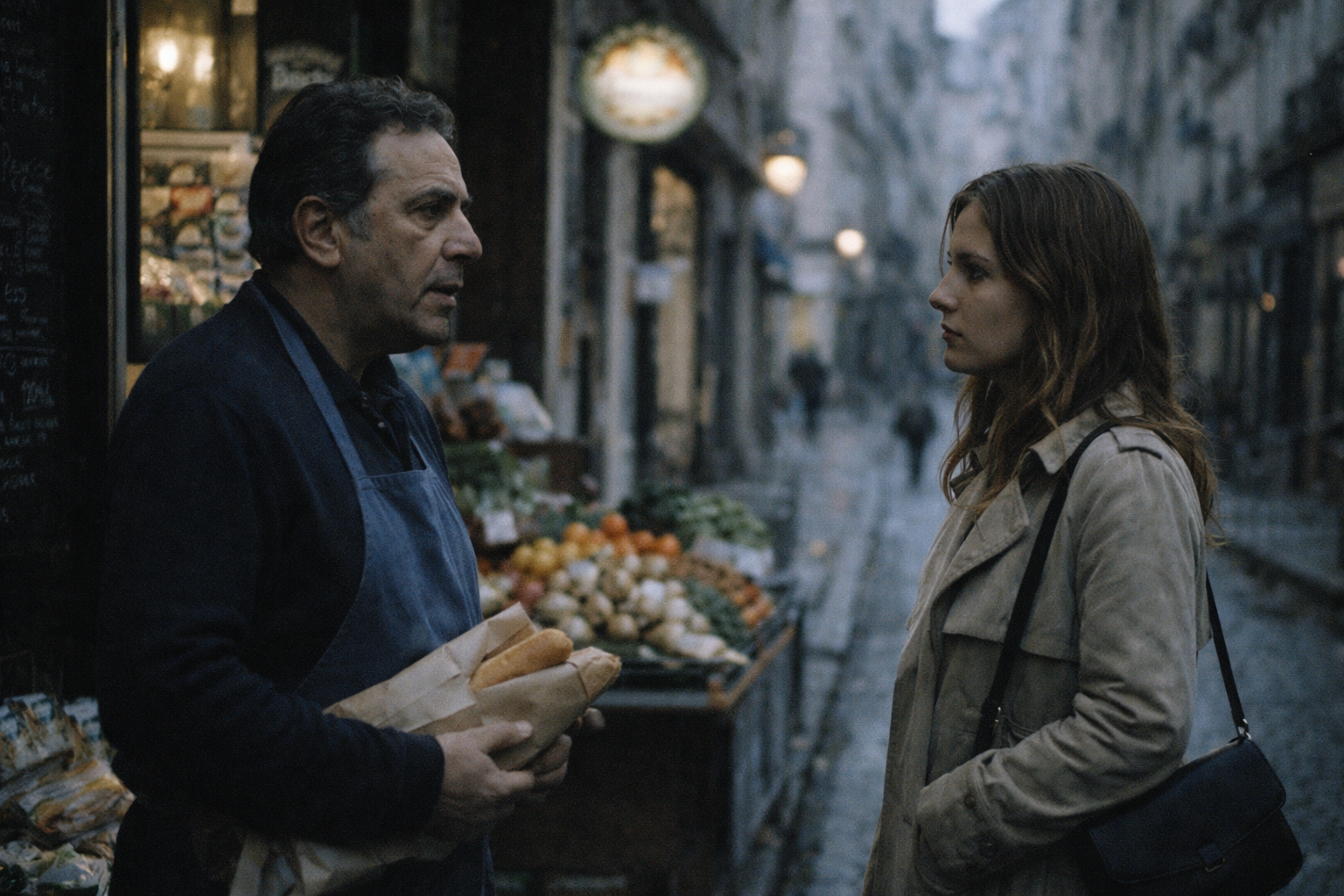
Instead, I was met with refusals, corrections, and the small humiliations Paris offers those who have not yet learned her ways. Fingers wagged. Voices tightened. Doors, literal and otherwise, closed on occasion.
Paris did not accommodate.
It instructed.
And I, frustrated by the weight of those early encounters, became determined to figure her out.
The Arrival
Christmas Eve. Rain. Cold. Confusion. Delay. Resistance.
Not long after those early encounters, I chose, somewhat impulsively, to spend Christmas in this city of light instead of going home.
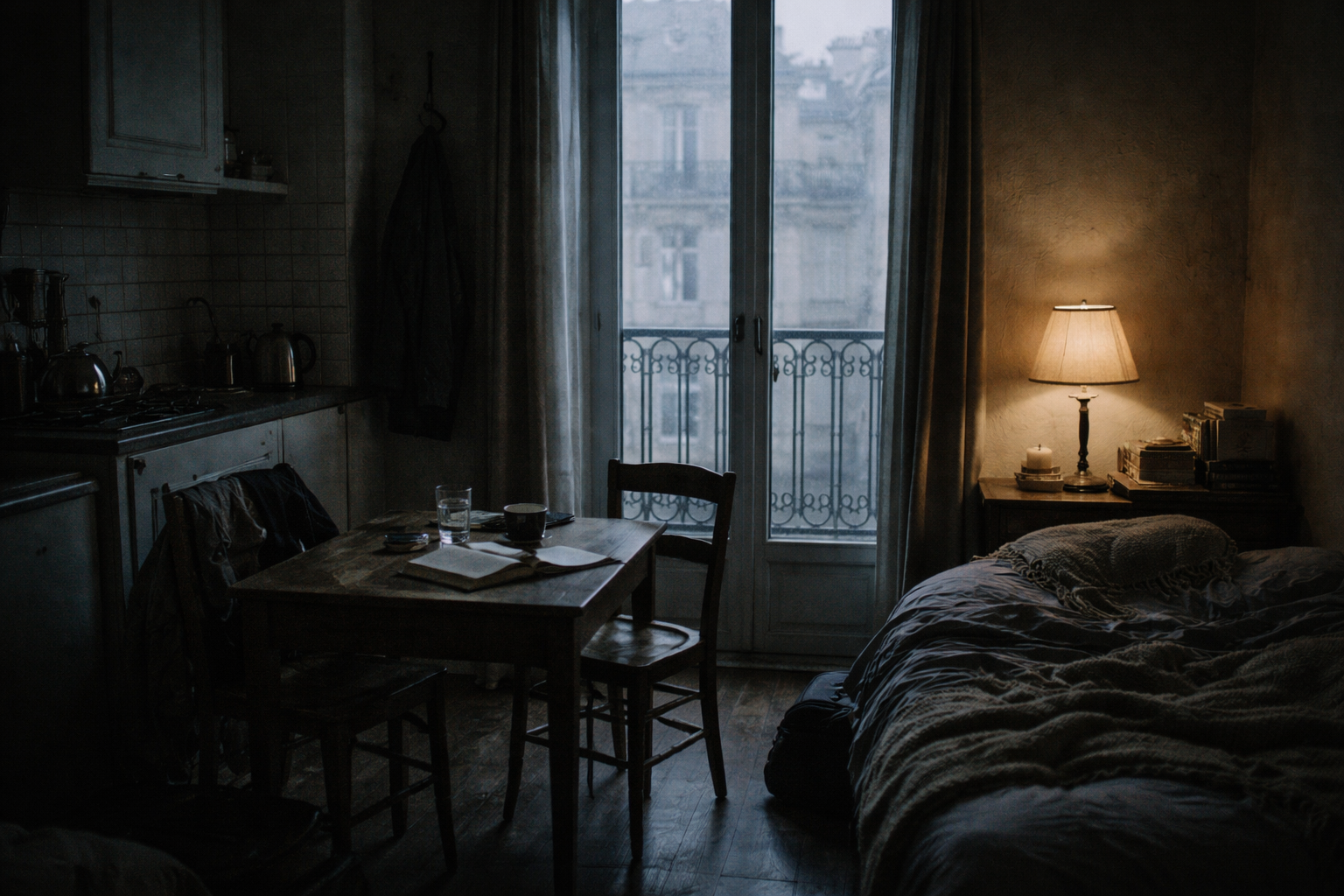
I rented a studio in the first arrondissement. On paper, it was ideal: central, refined, a place from which I hoped the city might finally reveal itself with some kindness. I imagined quiet mornings, long walks, a gentle unfolding.
That is not how it began.
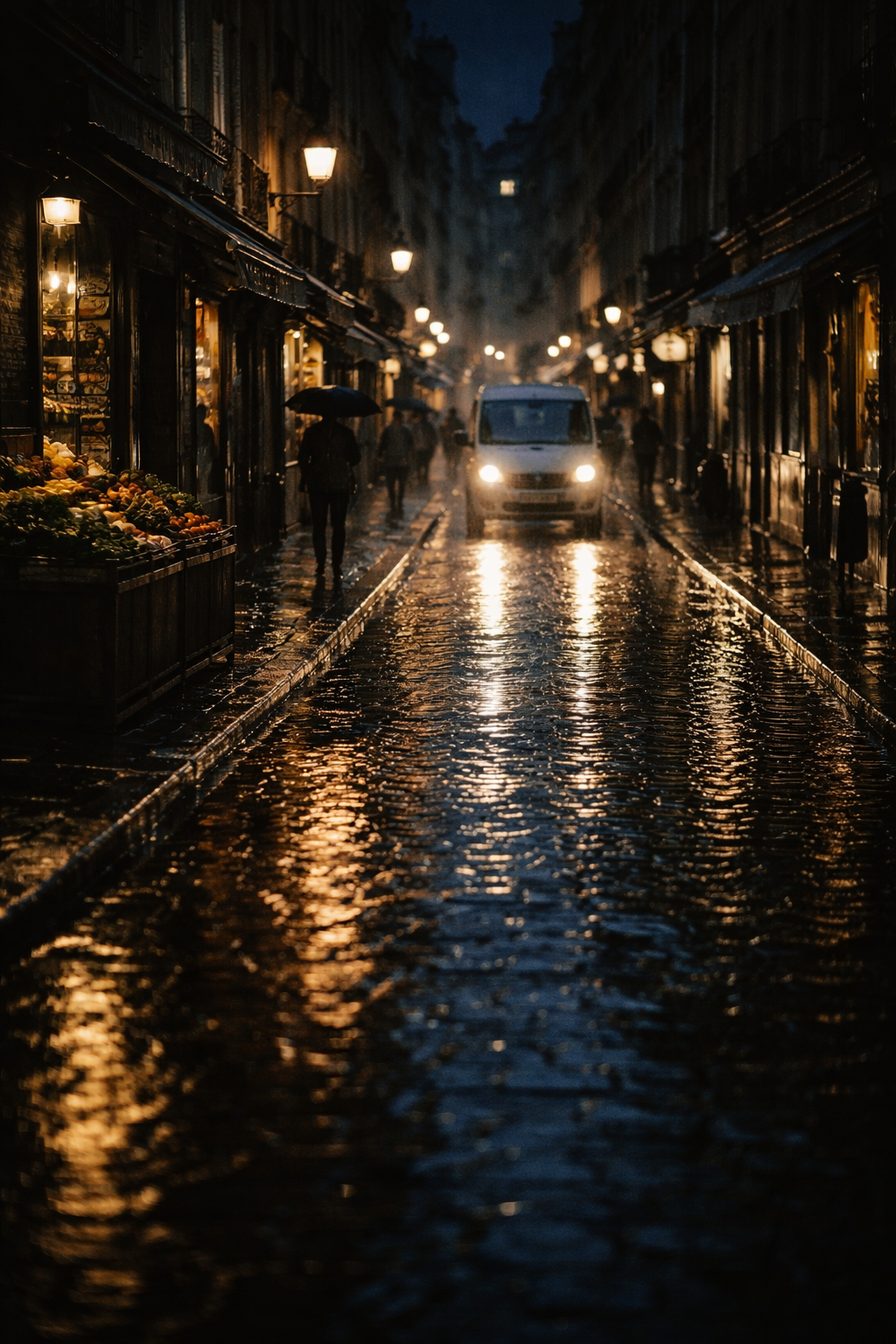
It was Christmas Eve when I arrived. Cold, wet, dark. Rain slicked the streets, turning every surface reflective and uncertain. The driver who had collected me from the airport, now a longtime friend, navigated the narrow streets with patience as we searched for the address.
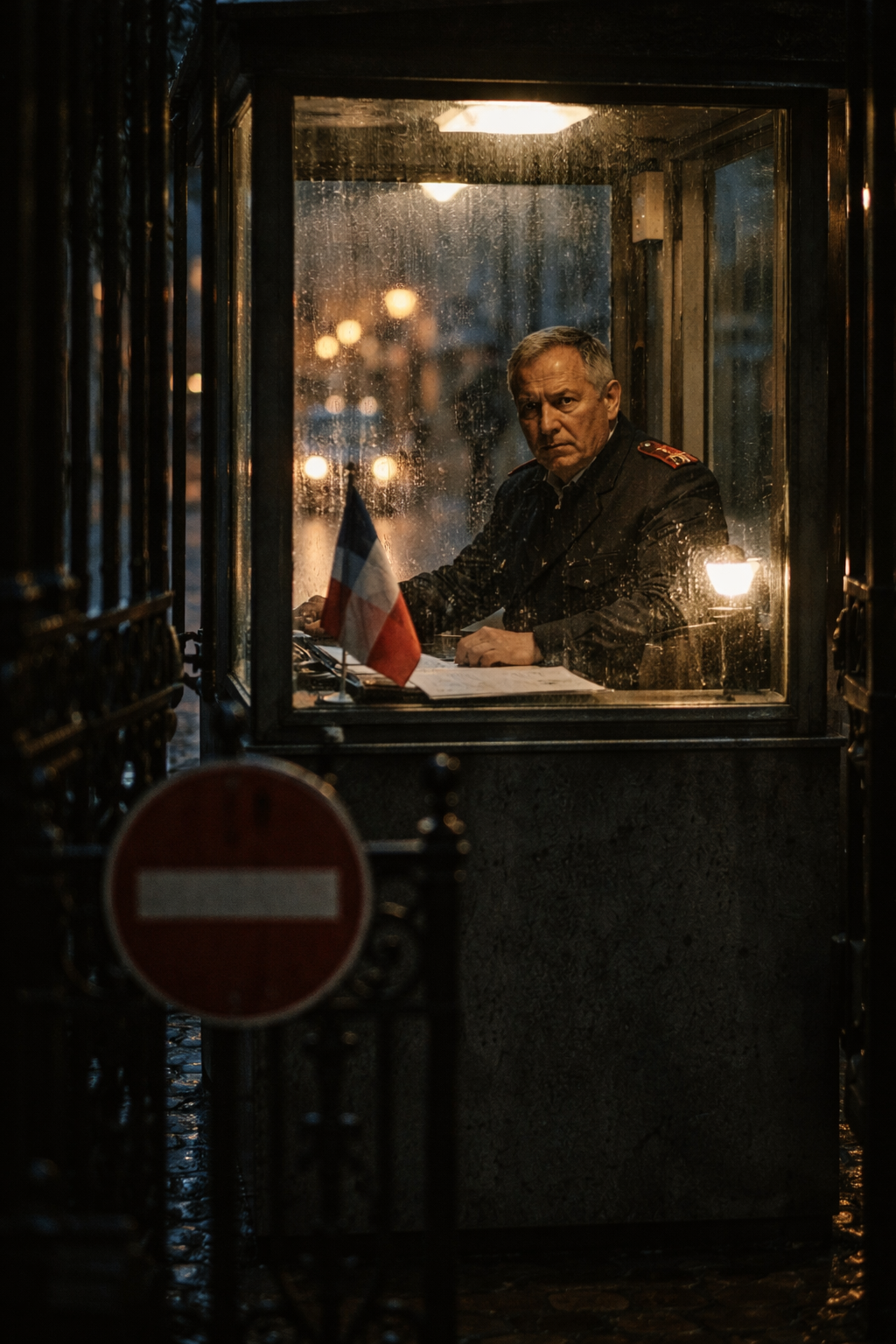
We reached the entrance to a small lane secured by metal street risers that emerged from the pavement, three solid barriers controlling access. At her post, behind her own glass barrier, stood a woman who made it immediately clear that we would not be entering the street, even though I had the rental contract in hand.
I had declined parking, so she determined that the van would remain on the street, however briefly, and that this violated the rules.
She refused to lower the barriers. Refused to let the van pass. Refused even the possibility of a brief stop.
We explained. Then explained again. The rain continued. The cold settled in.
Eventually, reluctantly and with visible displeasure, she agreed. She threatened us with imminent ticketing if the van stayed for any length of time. Then, almost theatrically, the round barriers descended slowly into the street below us, granting temporary passage. It felt less like permission than concession.
Inside the lane, nothing was clear to me.
There was an entrance, an obvious door at the designated address. But inside that door waited three separate entryways, each equally plausible, each unmarked. The instructions I had been given did not resolve into anything usable. We tried one door. Then another. Then returned to the first, uncertain now of what we had missed.
Time stretched. Frustration sharpened.
When we finally located what seemed to be the correct building, another problem emerged. There was no indication of the apartment’s floor. No number. No direction. Just a stairwell and a silence that offered no guidance.
We climbed.
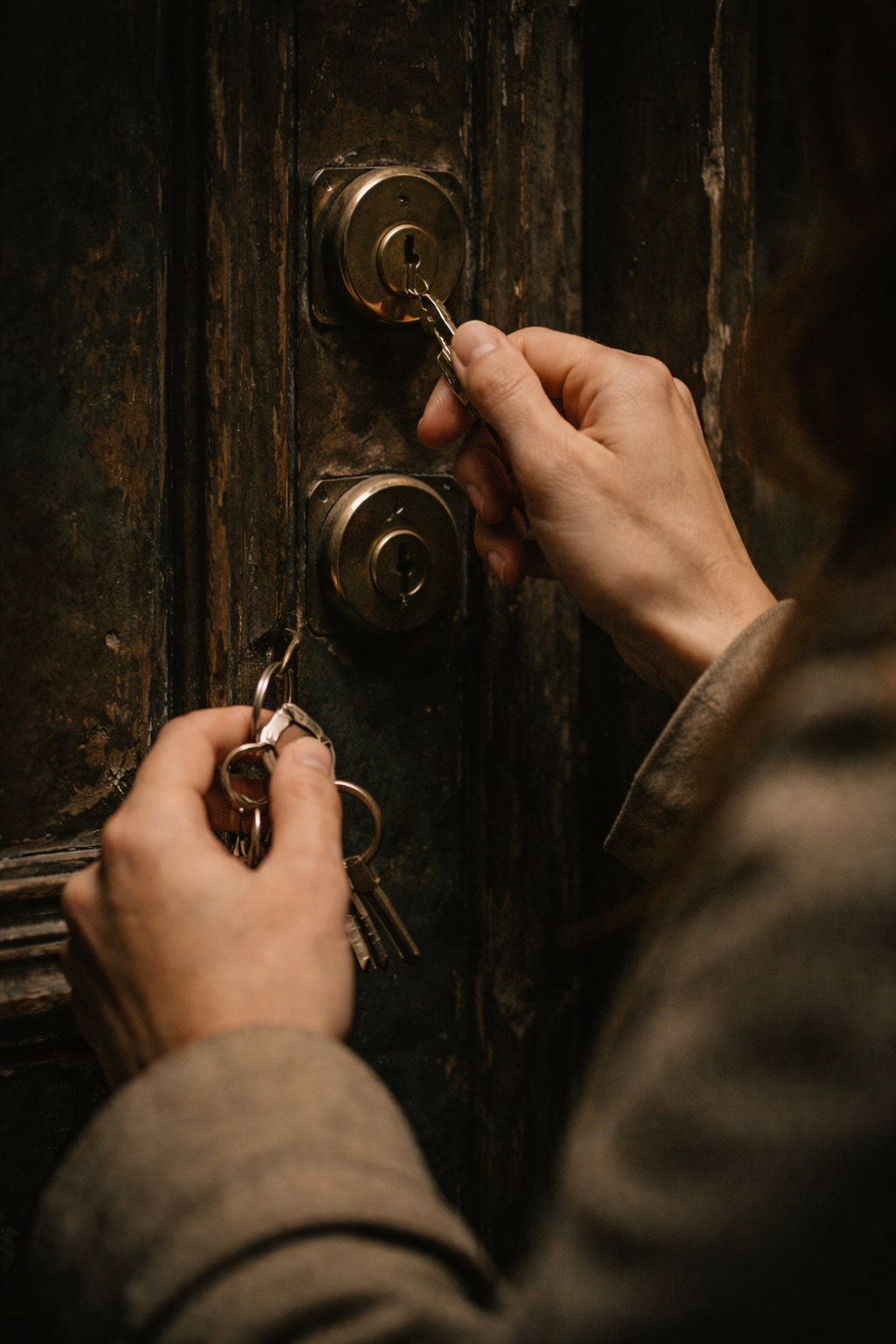
The hallway was dim. The doors were indistinguishable. At last, we found it, or believed we had. Two locks. Two identical keys. No indication of which key belonged where.
We tried one. Then the other. Then again, reversing them this time. One key turned clockwise, the other counterclockwise. Or perhaps the opposite. Each attempt felt futile, uncertain, as though the door itself resisted our presence.
By then, hours had passed.
Cold, damp, and exhausted, I felt less like a guest than an intruder, someone who had not yet earned the right to enter.
When the door finally gave way, it was not relief I felt, but depletion.
Inside, the challenges continued. The heat was off. The water ran cold. Nothing functioned in the way I expected or in any way that was immediately understandable. Every small necessity required investigation, interpretation, adjustment. It was, in its own way, another system to decode.
At last, I was settled. Everything worked. Lights on. Heat beginning. I said goodbye to my faithful driver, and soon-to-be friend.
Now there was only one thing I wanted: to recover, to warm myself, to reclaim some sense of ease, and to take a hot bath.
Paris, it seemed, required effort at every turn.
Still, I was not going to be defeated by this journey.
Adjustment
The next business day, still carrying the fatigue of travel and the residue of panic, I went to the agency.
I intended to explain, not to complain, though part of me did want to reprimand them for the lack of assistance. After all, I had just completed an eleven-hour flight and arrived here hoping, perhaps foolishly, to soften my fear of the city.
Instead, I was met with indifference.
Pas ma faute, the woman told me. Not my fault.
Then she dismissed me with a flick of her hand, a cigarette held loosely between her fingers.
There was no apology. No acknowledgment. No attempt to reconcile what had happened.
I stood there for a moment, my indignation intact but somehow deflated. There was nothing to be done except absorb it, carry it, and move on.
Paris had spoken again. Briefly. Decisively.
And yet, something had shifted.
Perhaps it was the strange confidence that comes from surviving a difficult beginning. Perhaps it was making a friend in the process. Perhaps it was simply the quiet satisfaction of having stayed.
The change was not immediate. Not dramatic. There was no conversion scene, no cinematic opening of the city.
Instead, it accumulated.
I was still snubbed. Fingers were still wagged in my direction. But I also began to notice moments of acceptance, even within my clumsiness.
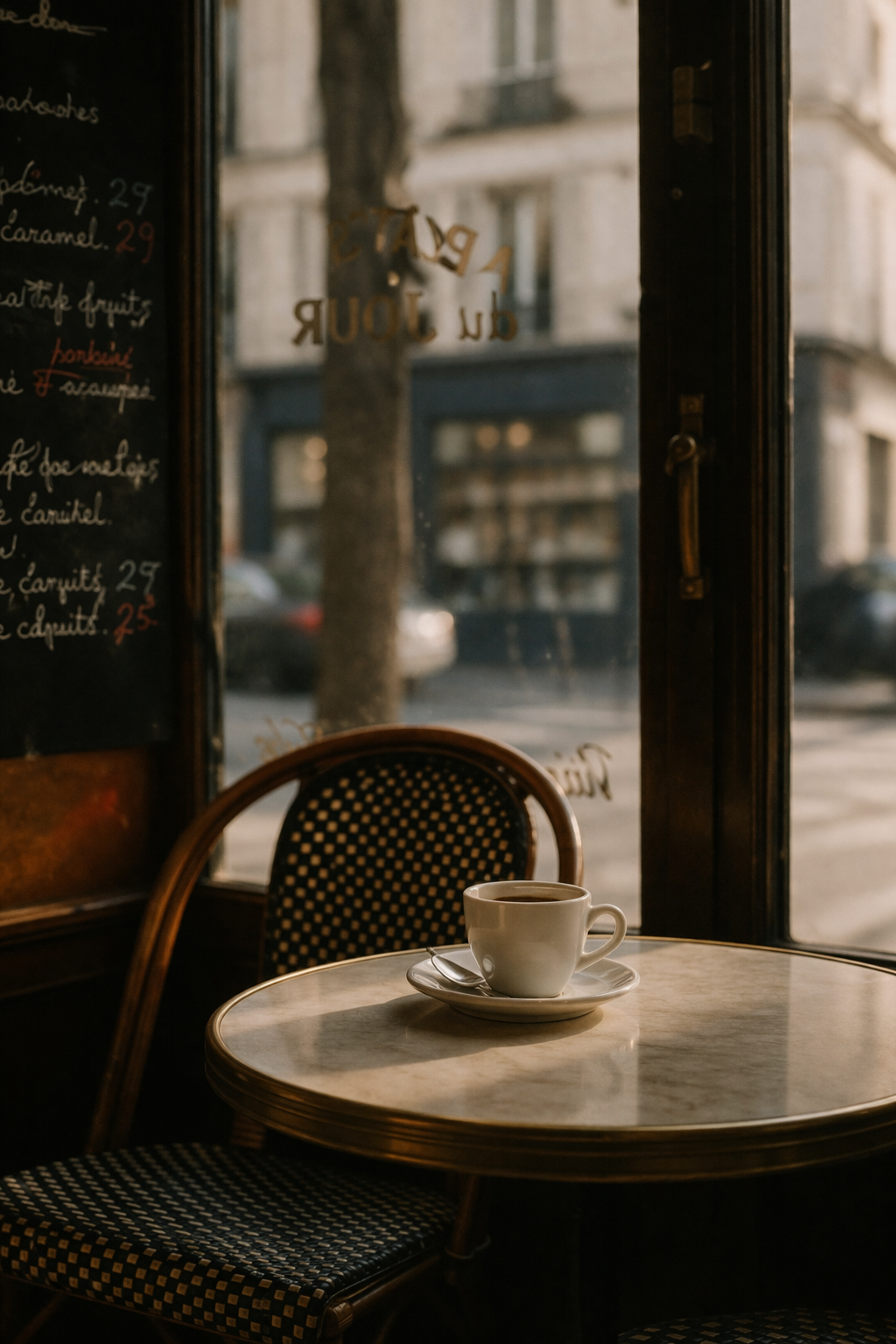
During the lunch hour, I was once allowed to drink coffee at a nearby restaurant. My ignorance of the strict custom of lunch, from noon until two, did not stop me from wanting a late-morning coffee. I learned quickly: no coffee without lunch during those protected hours, and no meals after two unless the place advertises service continu. This one did not.
I had violated the ritual without understanding it.
Still, I was kindly allowed entry. I learned the lesson.
It may seem obvious, but sometimes a single cup of coffee, and a moment to enjoy it, is the whole point.
A Different Paris
Years later, the city had not changed. My way of moving through it had.
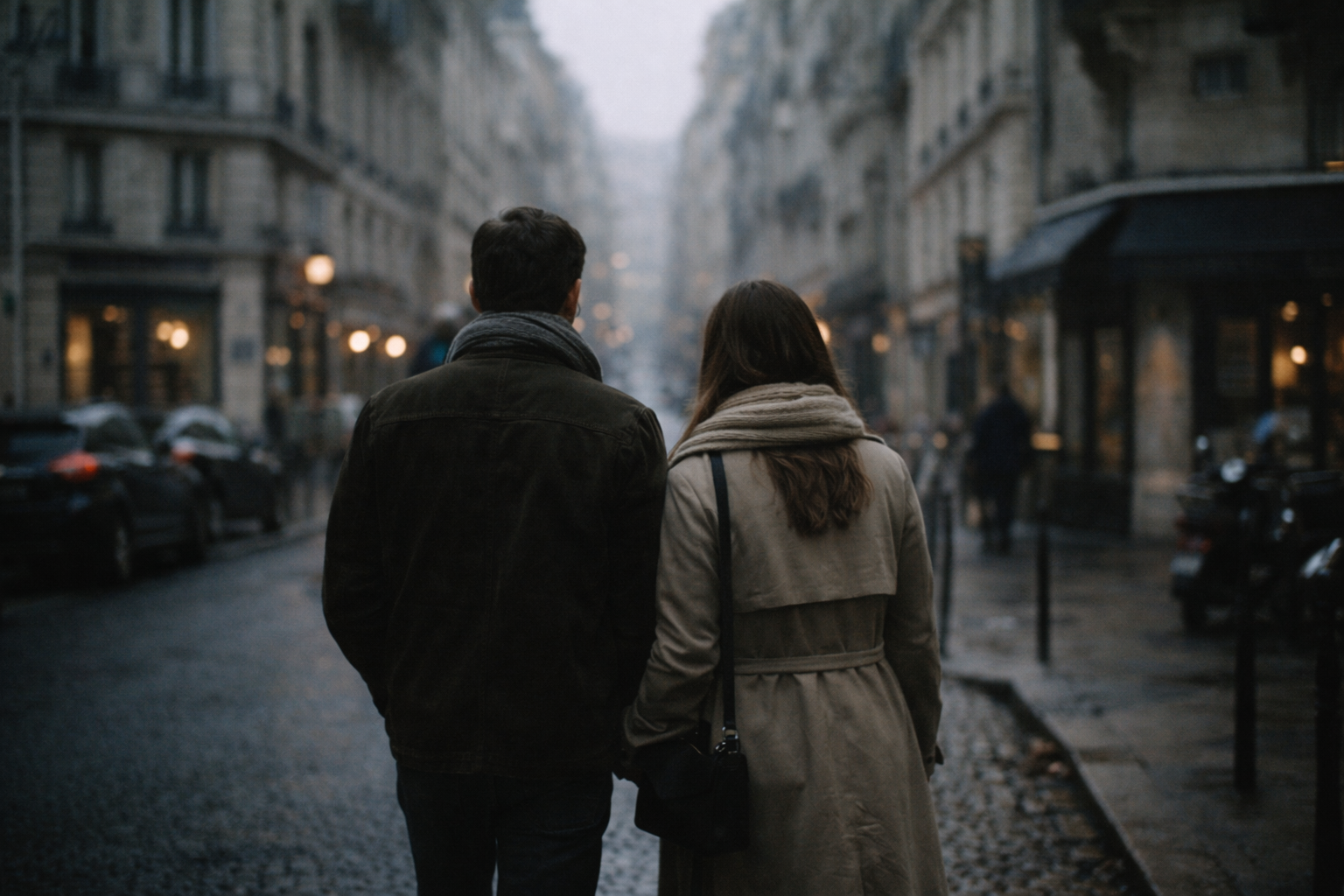
On my recent return, years later, I approached Paris with more openness. I had learned a few things, though I still respected her power.
My partner and I spent a week moving differently, walking without urgency, allowing the days to unfold without insistence. Mornings opened slowly. Evenings extended without plan. We did not try to master the city, only to move within it.
Paris did not resist.
Or perhaps I had finally acquired enough competence to proceed without provoking it.
We built our days around meals, as if structure could be restored through the ritual of food.
In France, there is a generosity embedded in dining, a fixed-price menu that makes even rarefied kitchens accessible. Michelin-starred restaurants open themselves to extraordinary eating experiences, offering not exclusivity, but invitation.
I made a list.
Our first indulgence was Le Dalí, under the direction of Alain Ducasse. The experience was precise, attentive, assured. I no longer recall each dish in detail, but I remember the progression, the pacing, and the sense that every plate could stand on its own and yet belonged to the next.
It required nothing from me but attention.
There was relief in that. A kind of surrender.
We balanced meals with movement.
At the Louvre, we slipped past long lines with curated tickets and entered with eagerness. We moved through rooms dense with creation, walls alive with scale, color, and human ambition. What moved me was not one masterpiece, but the accumulation.
Vast canvases stretched floor to ceiling, immersive and encompassing. I found myself sitting for long periods, tracing movement inside those pieces of history and beauty, thinking about the discipline required to arrive at such refinement.
The experience demanded stillness.
At the Monnaie de Paris, Escher’s retrospective offered a counterpoint.
Where the Louvre opened outward, Escher turned inward, into tension, paradox, and uncertainty. The images refused resolution. They doubled back on themselves, destabilizing the eye and unsettling the mind. I felt a low-grade pressure, as if perception itself had become unreliable.
It was not soothing.
It was not meant to be.
But it was exacting.
We also visited the Musée des Arts Décoratifs to see 1925–2025: One Hundred Years of Art Deco, a reminder of Paris’s enduring influence on how beauty is imagined and constructed. I was drawn to the balance: order imposed on exuberance, elegance distilled from excess.
A discipline again. An epoch of luxury.
We walked through the Tuileries toward the Arc de Triomphe, carried by the rhythm of the city, the muted rush of traffic, the cadence of passing strangers, the long winter footpaths. The crowds were thinner than in high season. The air, though chilly and damp, felt breathable.
We walked nearly thirty kilometers without ever coming close to exhausting the city.
It no longer required conquest.
There were, inevitably, moments that bordered on cliché.
We had lunch at the Eiffel Tower. The cloudless day allowed the city to unfold beneath us in shades of winter gray, and it was moving. Later, in the evening, we went to Café de la Paix for dessert and hot chocolate before crossing the river to see the tower again at night, lit and shimmering.
A spectacle, yes. But a real one.
I had resisted those moments for years.
The French dismiss them with a certain practiced indifference, yet they persist for a reason. They offer something uncomplicated: permission to be briefly, unapologetically moved by beauty.
I no longer resisted.
Paris, I realized, in its endlessness, suggests there is no need to conquer the city, only to continue a conversation with it.
If there is advice, it is simple. Walk. Sit where others sit. Eat where others are eating. Paris reveals itself slowly, often indirectly. It requires attention, but not force.
And something else too: a way of moving through the day that prioritizes pleasure without apology. A willingness to linger. To allow experience to take its time.
Somewhere between the first and last course, between the walk and the pause, between frustration and discovery, a thought arrived quietly:
Her charm was never meant to be conquered, only accepted—dans l’ordre des choses.
Her charm was never meant to be conquered, only accepted.
dans l’ordre des choses